
RTW lives in a side spreadsheet
When return-to-work dates are not on the case, everyone works from yesterday’s facts and the schedule drifts.
Disability and return-to-work visibility belongs with billing and case work, not in a separate product fantasy. Keep RTW and MMI where the nurse already manages the claim.
Best-practice disability tracking for case managers is not another portal. It is dates and status on the same record as tasks and documents.
When return-to-work dates are not on the case, everyone works from yesterday’s facts and the schedule drifts.
Maximum medical improvement questions arrive while the nurse is still hunting notes, restrictions, and the last employer update.
If billable time and work status are separated, status updates and billing lines stop matching what actually happened.
Teams do not need a fifth system. They need disability and RTW visibility on the file they already open for workers’ compensation work.
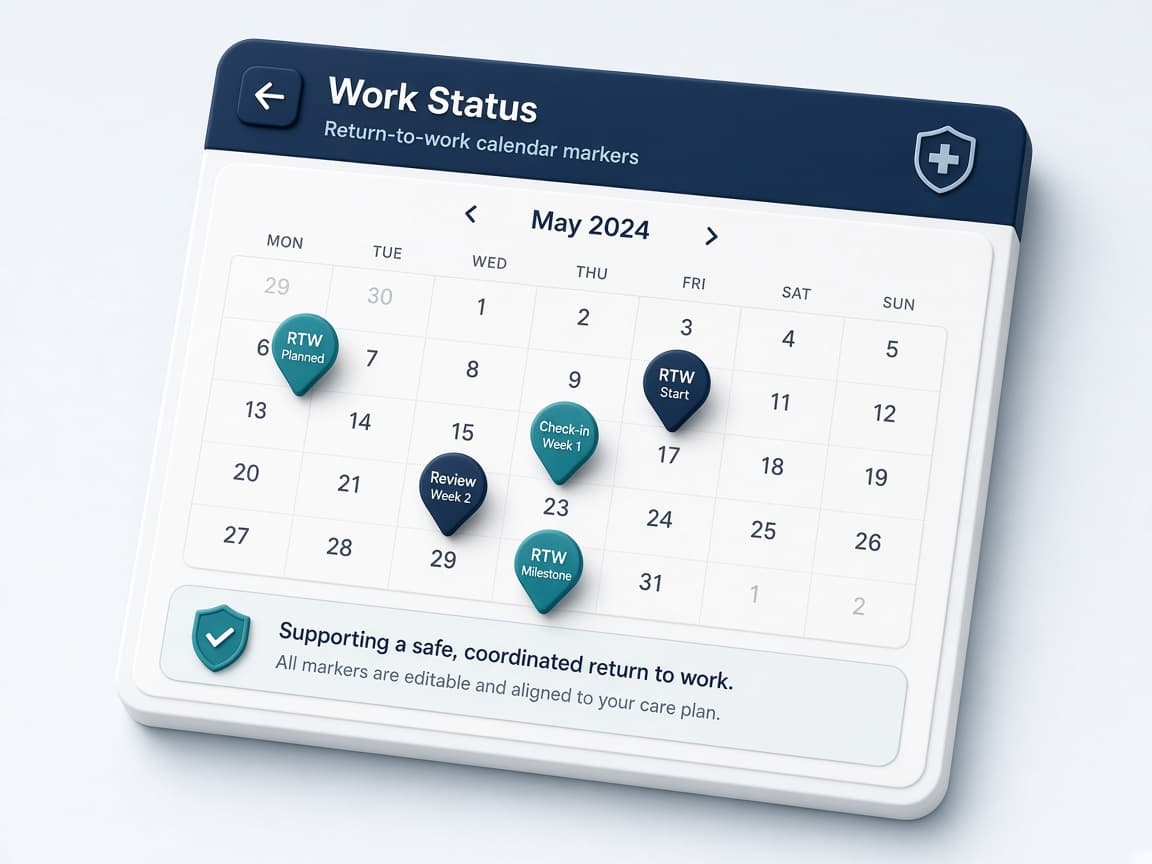
The app supports work status, return-to-work dates, and maximum medical improvement on the case. That is the disability story MediCase can tell truthfully.
 01
Work status lives on the same record as tasks and documents so the team is not working from a separate spreadsheet.
 02
RTW dates sit beside the nurse’s work so follow-ups and schedule decisions stay connected to the claim.
03Maximum medical improvement dates are tracked on the case file with the rest of the disability and recovery picture.
 04
Billable time and work-status facts stay on one file so status updates and billing lines match what actually happened.
No. Disability and return-to-work visibility belongs with the case and billing workflow. It is not a separate product and not the homepage eyebrow.
Work status, return-to-work dates, and maximum medical improvement dates are supported on the case file.
See Billing & Time Tracking for Unbilled, Ready to Bill, rejection reasons, and resubmit.
Choose a plan. Larger plans are reviewed before a workspace is created.